There are many variations in the materials used to construct snaffle bits. Each one can influence its action and determine which type the horse accepts and is most comfortable in. Due to the many choices of material, it may require a process of trail and error to determine the correct one for the horse.

Stainless steel is a common material used as it is strong, long lasting and relatively cheap to purchase.
To reduce corrosion, and improve its strength and shininess, chromium plus up to 10% of nickel is added.
Most bit rings are still constructed from stainless steel, even when the mouthpiece is made from a different material.

Rubber is coated over metal, or a chain, and offers a softer, warmer feel in the horse’s mouth. It can be easily chewed through so it requires regular checks for sharp edges. Vulcanite is rubber which has been strengthened via a heat treatment. It is designed to offer the softness and warmth of rubber, but is harder to chew through.
This material is commonly used for equines with very sensitive mouths, or when teaching young horses to wear a bit. This is because it is warmer and gentler in the horse’s mouth, and not as hard if the teeth were accidentally knocked whilst putting in or removing the bit.
It is rarely used as the horse progresses and advances in their training.
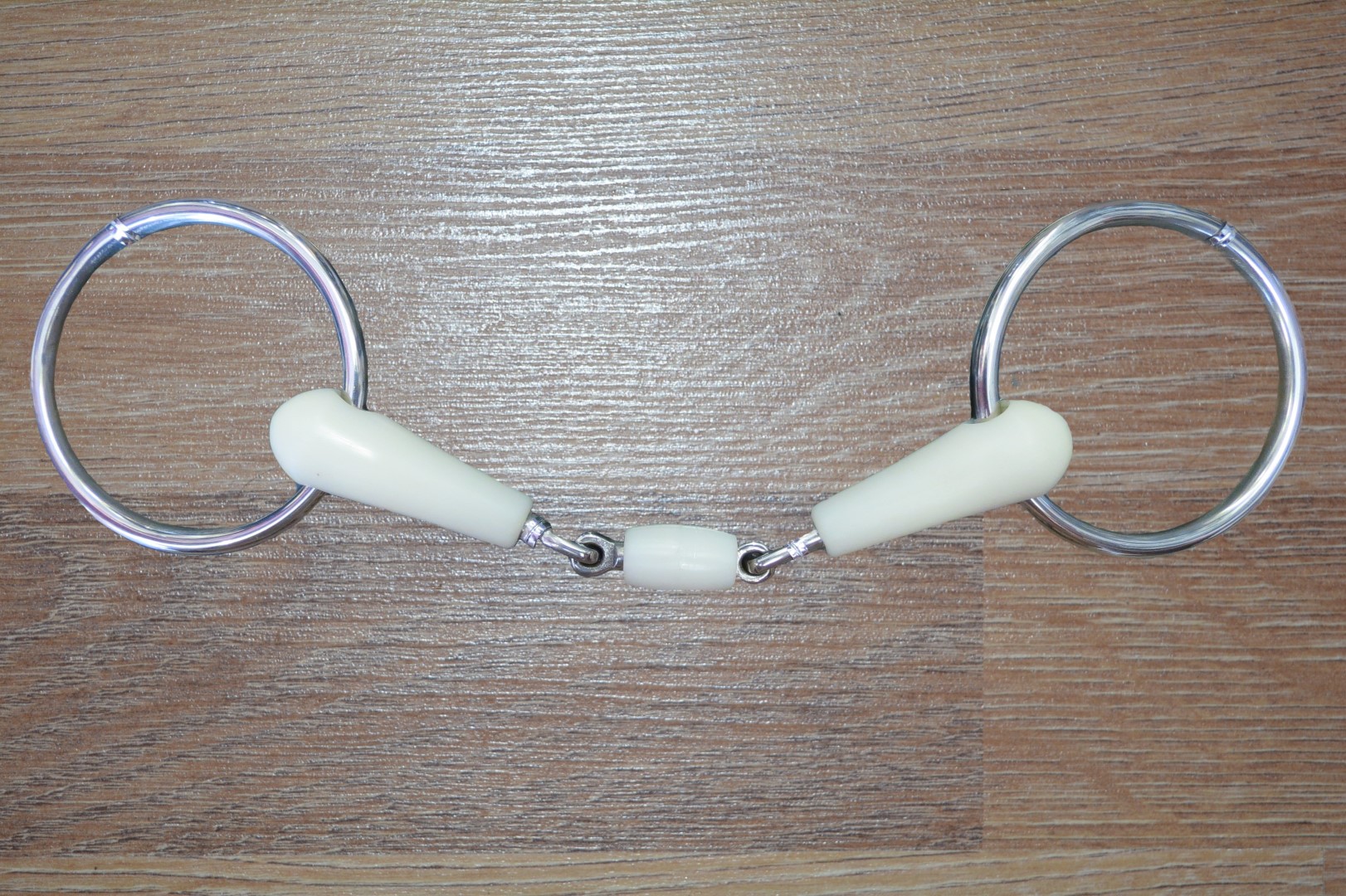
A soft, synthetic material coated over a wire chain. It requires regular checks for wear as it is less durable than metal and can be easily chewed through.
This material is commonly used for equines with very sensitive mouths, or when teaching young horses to wear a bit. This is because it is warmer and gentler in the horse’s mouth, and not as hard if the teeth were accidentally knocked whilst putting in or removing the bit. It can also incorporate a flavoured taste to encourage acceptance of the bit. It is rarely used as the horse progresses and advances in their training.
Importantly, naive, rubber and vulcanite can be too thick and may create friction in the horse’s mouth.

Copper is usually seen on the mouthpiece of the bit. It is designed to encourage the horse to salivate which helps increase sensitivity and softness of the mouth.
It is not as tough as stainless steel so it needs regular checks for wear or sharp edges.

Sweet iron is a mixture of iron and copper. It is usually found on the mouthpiece of the bit.
It is thought to taste sweet in the horse’s mouth, therefore increasing salivation, sensitivity and softness.
It has a rusty appearance as it wears.
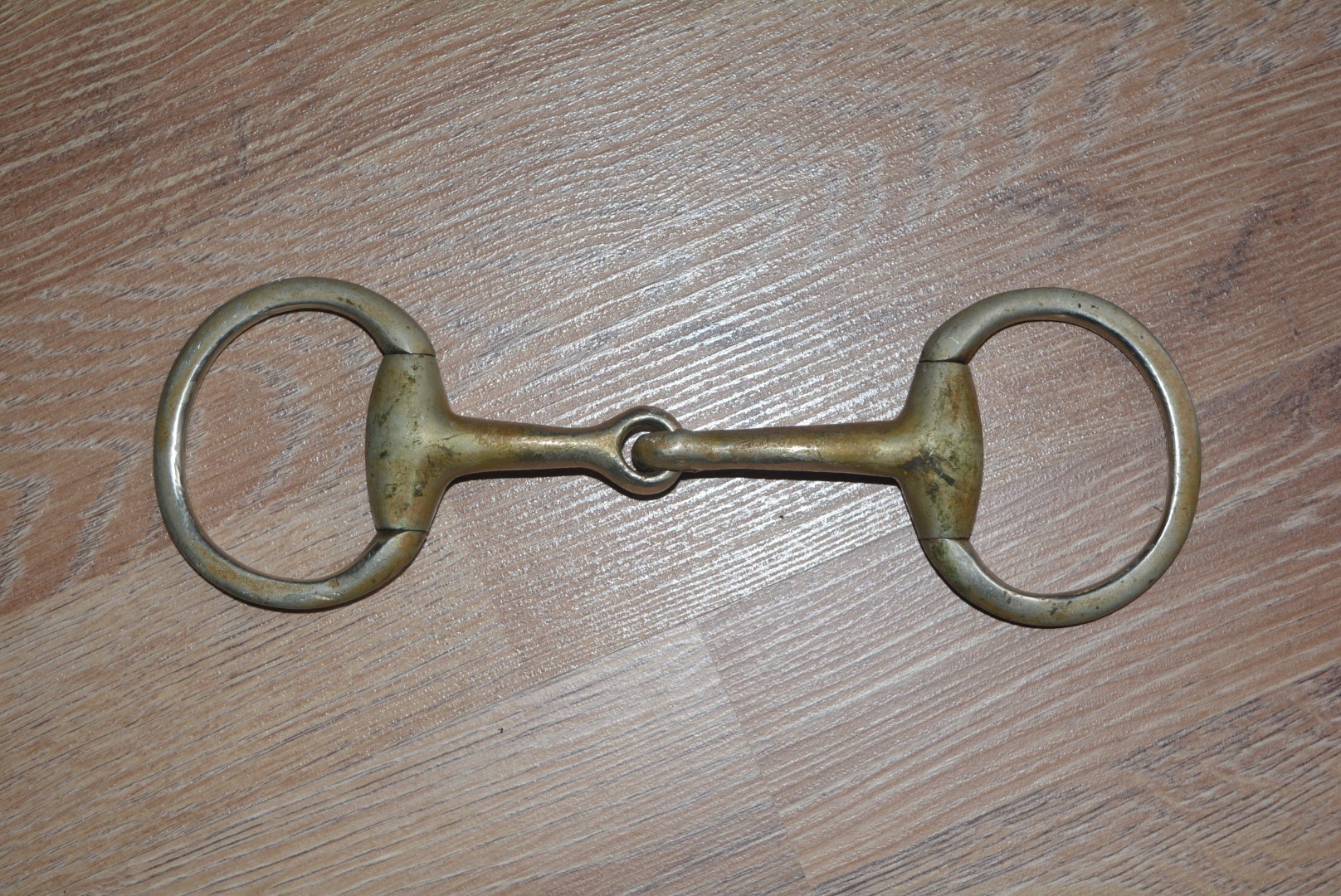
Nickel is much weaker than other materials and can produce sharp edges, or snap under pressure.
It is not used today to make bits, however it may be included with other materials because of its warmth and softness.
Nickel is also thought to cause an allergic reaction and mouth sores in certain horses.