Depending on the level or discipline the equine is being worked at, on the flat, will generally influence the type of saddle used. If the horse is an all-rounder, at the lower levels, a GP saddle is perfectly adequate to use as it allows the rider to perform both jumping and dressage without the need for a change of saddle. For those competing at a higher level the correct saddle should be used as it is purposely designed to accommodate the requirements of the horse and rider. Other saddles which may be worn when schooling the horse on the flat may include the show or side saddle.
The dressage saddle is popular to use for schooling on the flat. This is because it is constructed with a deeper seat, straight-cut panels, stirrup bars positioned further back and longer length girth straps. All of these features have been specifically created to enable the rider to give precise instructions using finely tuned movements from their body, seat and legs whilst creating a close contact with the horse.
For the rider the deeper seat encourages a centrally balanced, secure seat. The straight-cut panels enable the rider to maintain a long, straight leg to give precise aids to the horse. Knee and thigh rolls further assist in leg stability, however the size and use of them tends to be down to the rider's preference. Depending on the type of saddle some are permanently fixed onto the saddle flap whereas others are fitted underneath, secured by velcro, allowing them to be moved around to suit the rider's needs. Stirrup bar location also assists with correct alinement of the leg. As they are situated further back it encourages the leg to naturally lengthen and stretch downwards, underneath the seat, whilst also preventing the stirrup leathers being pulled backwards at an angle. The longer girth straps, fitted with a dressage girth, means the buckles do not interfere with the rider's legs allowing a closer contact with the horse.
In addition to the rider, there are also benefits of the dressage saddle for the equine. Straighter cut saddle flaps shows off the horse's shoulder, whilst also providing it with freedom of movement. The close contact of the saddle allows all physical communications from the rider's legs, seat and body to be transmitted and felt clearly by the horse. In addition, when the rider is able to sit quietly in the correct position, the horse is able to achieve a more advanced way of going. Obviously, as with any saddle, it must be well fitted and suitable for the horse.

Saddles which are too small can pinch the wither, shoulder or back. Also, it will not distribute the weight evenly over the horse’s back.
A saddle that is too big will create large amounts of movement, causing rubs and sores. It may also sit too low on the horse’s back or spine.
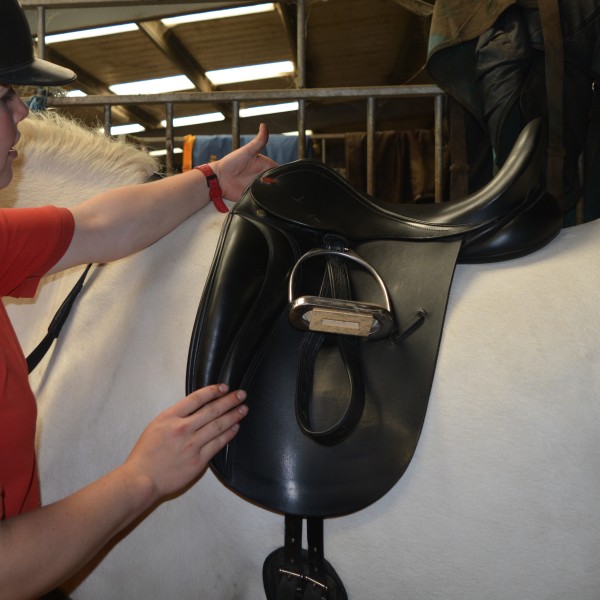
When the rider is dismounted there should be clearance of around 4 fingers between the pommel and wither.
There should be clearance of around 3 fingers between the pommel and wither when the rider is mounted.
If there is more than these numbers, the saddle is too narrow for the horse. Likewise, if there is less the saddle is too wide.
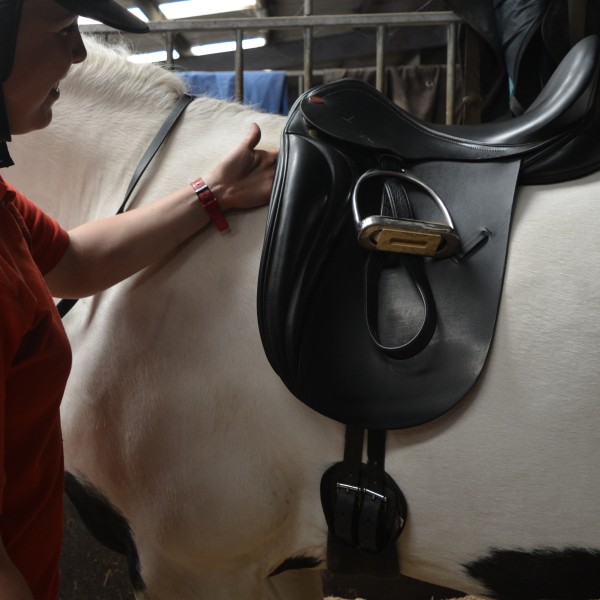
The saddle should be positioned behind the shoulder to allow it freedom of movement.
With or without a rider sat on the saddle, you should be able to run your hand down between the side of the saddle and shoulder, without any areas of excess tightness.
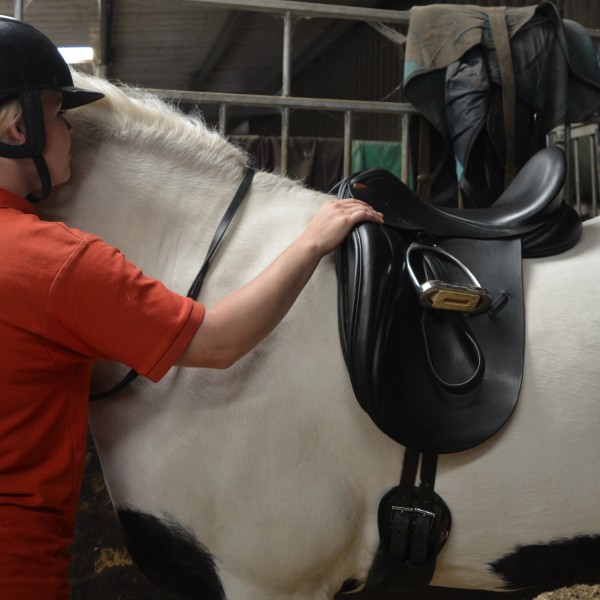
From the front of the saddle, you should be able to see daylight all the way through the gullet.
If daylight cannot be easily seen, the saddle is sat too low on the horse’s back.
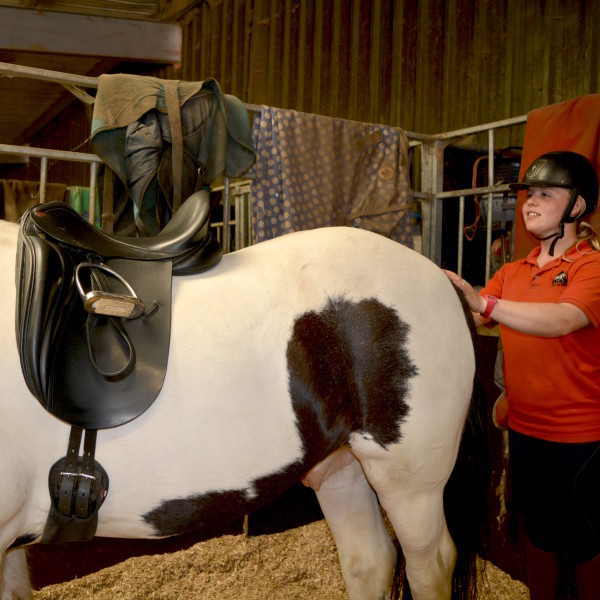
When standing directly behind the horse, you should be able to see daylight all the way through the gullet. This prevents the saddle sitting on the horse’s spine.
If daylight cannot be easily seen, the saddle is sat too low on the horse’s back.
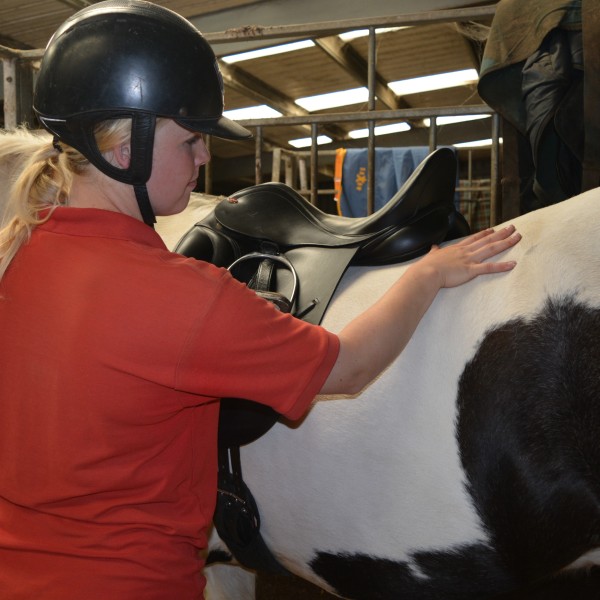
Roughly there should be a gap of one hand’s span between the top of the flanks and the back of the panel. This prevents the saddle sitting on the unprotected loins.
If there is less than one hand’s span the saddle is too long. Likewise, if there is more the saddle is too short.
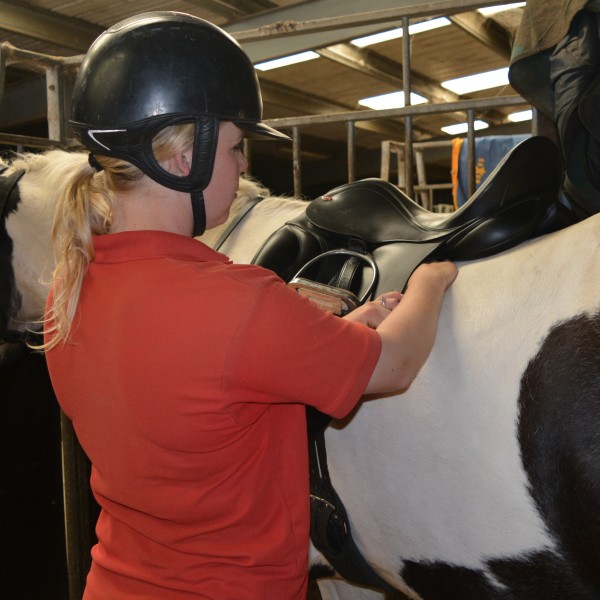
The panels should sit flat against the equine’s back on both sides. There should be no unevenness or gaps anywhere along the back. The stirrup bars should not feel tighter than the other areas of the panels.
If the panels appear to arc or rise up at the back of the saddle, this is an indicator that the tree is the wrong shape for the horse’s back.
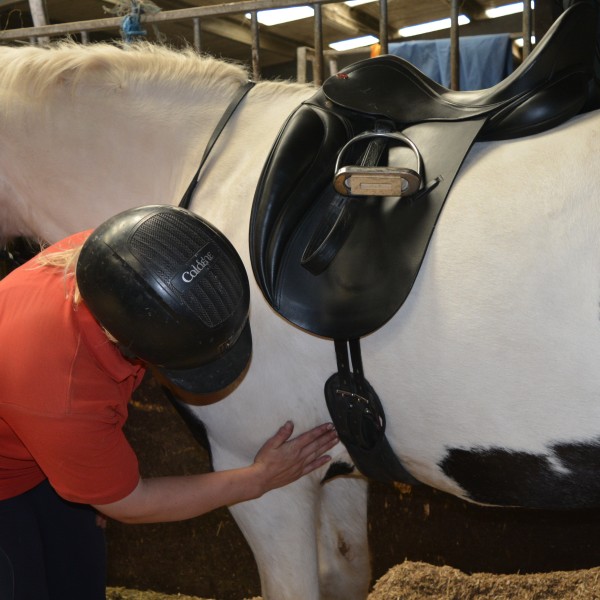
The girth buckles should be fitted roughly one hand’s span above the point of elbow.
This prevents them interfering with the elbow whilst the horse is working.