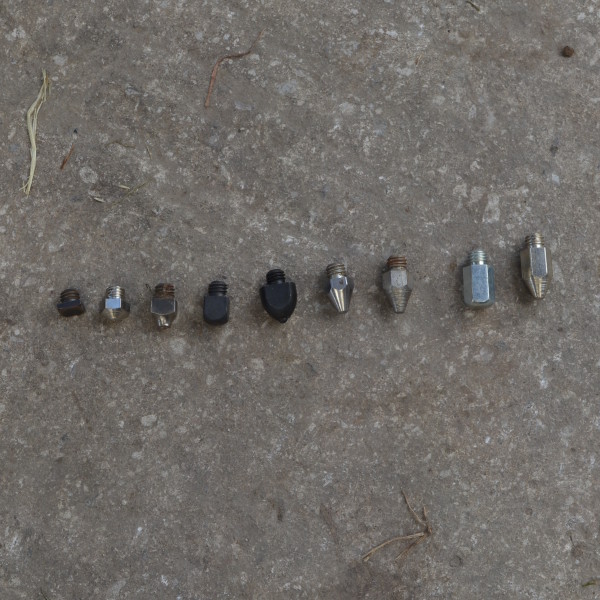
There are two main types of studs: temporary studs and road studs/nails. Both types are designed to help prevent the horse slipping, which in turn can also improve their confidence as the foothold is increased.
A road stud is an ordinary horseshoe nail, with a tungsten carbide pin added into the head of the nail projecting about 1mm outwards. They are permanently fitted, by the farrier, to the horse's shoes in either both front, both back or all four. The purpose is to offer some grip whilst riding, on either roads or soft going, and can also help reduce the wear of the shoe. As they are permanently fitted they require no maintenance.
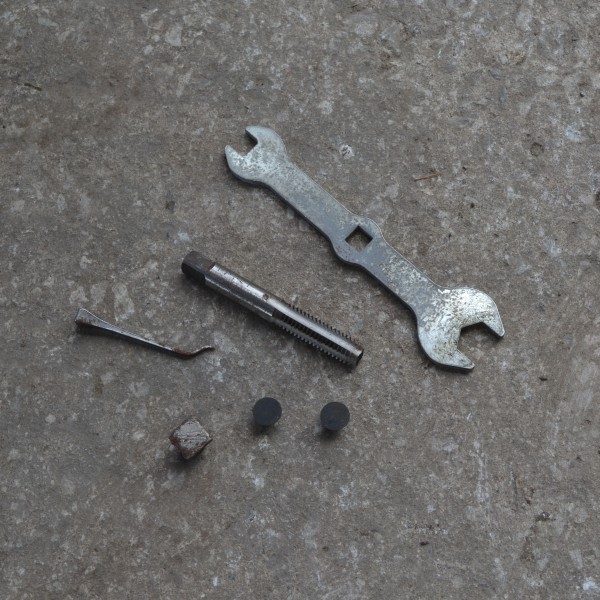
Temporary studs are fitted when the horse requires extra grip, usually whilst jumping, and are removed when not needed. To fit, they require stud holes drilled into the shoes by the farrier. This hole must be filled with cotton wool soaked in oil, or purpose stud plugs when not in use to prevent the thread becoming damaged or filled with dirt. The studs should be stored together and wrapped in an oiled cloth to prevent them rusting.
The day before a competition, the stud holes should be cleaned out and re-plugged to prevent issues arising on the day. When using studs the horse should wear protective boots, and a stud girth if they are fitted on the front shoes.
Fitting the correct studs for the ground conditions is vital; personal preference, and the horse's requirements usually dictates how many studs are fitted. Before using at a competition, the studs should be trialled at home to ensure the horse is comfortable wearing them.
Studs can be fitted:
Studs should only be used when necessary, as incorrect or over use can cause serious injuries to the horse's foot and lower leg. They must never be used on hard, solid surfaces, or whilst travelling.